
An Expert in The Times
A few weeks ago, I was scrolling through Instagram and happened upon a video by Joanna “Jojo” Levesque (yep, the “Get out, right now, it’s the end of you and me!” Jojo). In the video, she shared a think piece about the use of Auto-Tune in live singing, which I thought was so interesting because, let’s be honest: it’s very present in many live performances. The video itself brought light to the subject matter as a whole while considering the notion that live singing isn’t “human” anymore, since the stakes and standards can seem unrealistic at times for the human voice.
Now, being a person who has the unique job of analyzing vocals for a living, I decided to share my perspective on the subject matter.
My comment said:
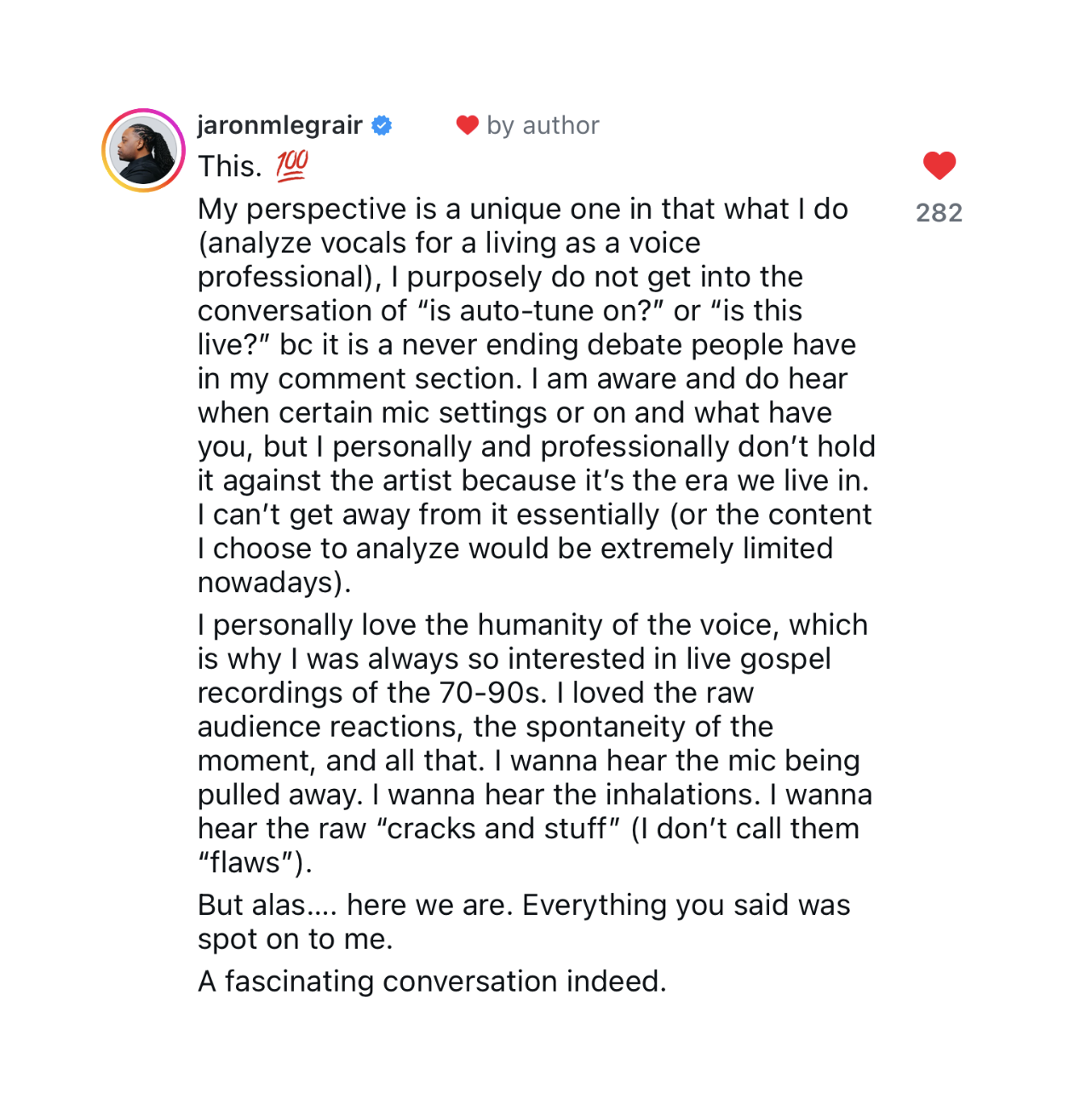
I didn’t really think much about the comment itself. I just wanted to share my viewpoint from my vantage point to hopefully help educate and bring clarity to the subject matter.
About a week later, The New York Times reached out to me to ask for an interview for an article they were developing regarding the matter. Initially, I thought it was a joke or a scam, so I did my research to see how “legit” this person was. As I was searching, I realized that this person was likely real! So I responded to the email, and a week later, I was on the phone with The New York Times on a Wednesday afternoon after a full day of teaching Music Theater voice students at Oberlin College.
The day of the interview, I was rushing out of my office to get to my car, and the administrative assistant saw me in said rush and asked me what was going on. So I told her and asked her not to tell anyone because I wanted it to be a surprise (plus, I really didn’t know if I was going to be mentioned or published in the article, so I didn’t want to get my hopes up just to be left out).
So I got to the car, got the call from the journalist, and had the interview while driving to the store to grab some home and office necessities.
The interview was a learning experience for me in that I had to be okay with making statements that people may not agree with. In my work online, I really try to stay as neutral as possible. My “Social Media Philosophy” is simply to provide information to those who follow me and watch my content. I describe sounds and artistic choices. That’s it. I let my followers and supporters form their own opinions about the artist or person we’re discussing.
But in this interview, I was forced (if I can use that word) to express how I felt about the use of Auto-Tune technology in today’s vocal performances.
That was a little uncomfortable for me. I’m so used to explaining what I hear without necessarily telling people how I feel about what I hear. There’s a difference. I can recognize that Auto-Tune is being used, explain what I’m hearing, and even understand why an artist may choose to use it without making a judgment about whether that choice is “good” or “bad.” That distinction has always been important to me in my work.
But the interview made me realize that having an informed opinion doesn’t necessarily compromise my ability to be objective. I can acknowledge the realities of the industry, understand why these tools are used, and still have a personal preference for hearing the humanity of a voice. Those things can exist at the same time.
I knew that those reading my words and thoughts in the article would get a glimpse of how I personally feel about the subject matter. Initially, I was nervous about letting the public see my opinion, but then I realized that it was okay to show my backbone as a professional and consumer of musical and vocal art, so I decided to stand ten toes down in what I felt and how I felt about it. There was also something different about knowing that my words would ultimately be placed into someone else’s story. On my own platforms, I control the context around what I say. In an interview, I had to trust that I had communicated my perspective clearly enough that it could stand even after being condensed into a quote.
Even after feeling that way, I was very unsure if they were actually going to publish my words in the article itself, so I sort of wrote it off in my head until I got the email that Friday morning saying the article had been published.
I opened the email, clicked the link, and frantically scrolled until I saw my name…
And there I was:
My full name, mentioned as an expert in The New York Times.
Never in a million years would I have thought that I would be in The New York Times at all. I guess I just never thought about it seriously. Alas, there I was. I couldn’t wait to tell my family and friends and surprise them since they knew nothing about it (besides one cousin whom I tell almost everything to).
I also shared it online on my platforms, and people showed so much love. Some even reminded me that The New York Times was one of the most popular publications in the world. That statement blew my mind and surprised me. Not that I didn’t think it was a big publication, but I guess I just never associated myself with it, so to be mentioned in it is just amazing. And to be mentioned alongside greats like Lalah Hathaway (an artist whom I love and respect to a high degree) is just mind-blowing to me.
These two little paragraphs were so massive in their impact on me personally and professionally.
You just never know what could happen on social media. A harmless comment engaging with a subject matter that affects my work ended up being the very breadcrumb that caught the attention of The New York Times and led them to reach out to me for my insight.
And here I am… a voice teacher from Ohio, mentioned and published in The New York Times.
